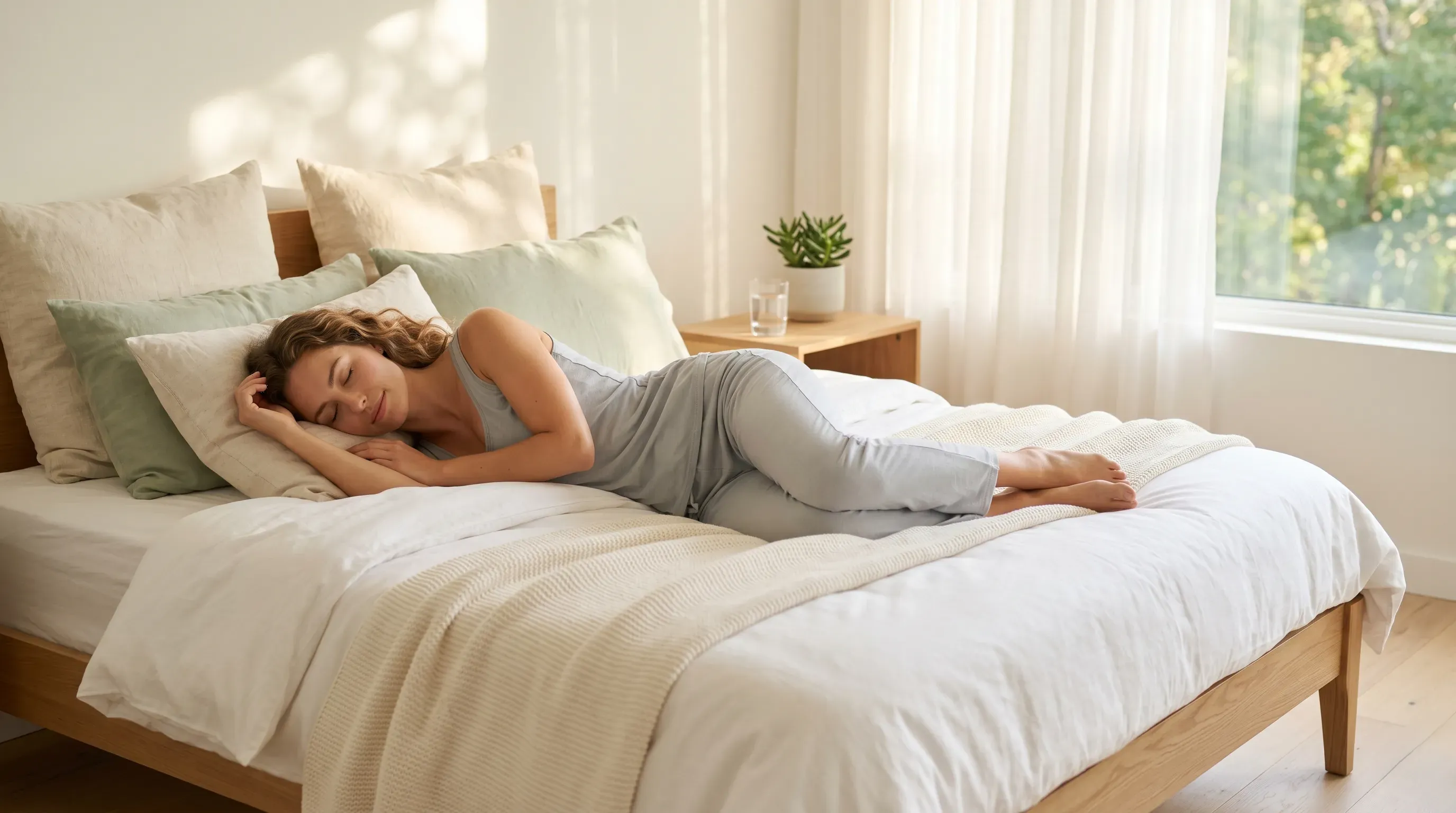
Sleep, Weight & Body: A Woman's Guide to Better Habits
Hey there, beautiful! Do you ever find yourself staring at the ceiling at 2 AM, thinking about everything from why your school bestie didn't like your last Instagram post to the exact science of how many calories you might be burning just by lying there? I do it all the time. Being a woman in 2026, especially in a fast-paced city like Mumbai or Delhi, means our minds never really stop. We are always juggling work, family, and that constant pressure to look and feel our best. One thing I've been thinking about deeply lately is the connection between our pillows and our waistlines. It is so fascinating how something as simple as a nap can change so much about our bodies.
I am an SEO expert, so I spend my days looking at what people are searching for, and honestly, we all have the same worries. We want to know if our sleep habits are helping us or secretly making things harder. So, let's dive into the deep end together and talk about sleep, weight, and everything in between. Trust me, I've done the research so you don't have to!
The Big Question: Does Sleeping Increase Weight?
This is probably the most common thing I see in my data. Many people ask, does sleeping increase weight? The short answer is: it's complicated, girl! Sleep itself doesn't just magically turn into fat. In fact, getting enough sleep is actually one of the best things you can do for your metabolism. When we don't get enough rest, our hormones go totally crazy. Our body starts producing more Ghrelin (the hunger hormone) and less Leptin (the 'I am full' hormone). This is why you crave those late-night samosas or extra Maggi when you're tired.
But when we talk about does sleeping increase weight, we also have to look at the "how" and "when." If you are sleeping all day and not moving at all, then yes, the lack of activity might lead to weight gain. However, if you are getting your solid 7-9 hours at night, you are actually helping your body stay lean. It is also important to consider how much calories we burn while sleeping. You might think you're just a log, but your heart is pumping, your brain is processing, and your body is repairing tissue. On average, how many calories burned during sleep depends on your weight and basal metabolic rate, but it is usually around 40 to 55 calories per hour. If you think about it, how many calories do you burn during sleep over 8 hours, it adds up to a decent amount just for existing!
The Afternoon Slump: Is It Good to Sleep After Lunch?
In many Indian households, the post-lunch siesta is a sacred tradition. But lately, I've been seeing girls on Reddit asking, is it good to sleep after lunch? We've all heard our moms say that if you sleep right after eating, you'll get a "tummy." Is there truth to that? Well, when you lie down immediately after a heavy meal, it can slow down your digestion and lead to acid reflux. So, will i gain weight if i sleep after eating? It's not the sleep itself that does it, but the fact that your body doesn't have a chance to use any of that glucose before you enter a resting state.
A lot of us also wonder, does sleeping in afternoon increase weight? Recent studies have shown that long afternoon naps (more than 30-60 minutes) are sometimes linked to a higher BMI. If you take a quick 20-minute power nap, it's great for your brain. But if you're doing a full 2-hour deep sleep at 3 PM, it might mess with your nighttime rest. So, does sleeping in afternoon increase weight? It might, if it becomes a habit that replaces active time or ruins your night sleep. I always tell my friends, if you must rest, wait at least 30 minutes after your meal and keep it short. Because will i gain weight if i sleep after eating depends mostly on your total daily calories, but timing definitely plays a role in how you feel.
Post-Workout Rest: Can We Sleep After Gym?
Now, let's talk about my favorite topic: the post-gym crash. You've just finished a killer Zumba or HIIT session in Bengaluru, and you just want to collapse. But then you think, is it good to sleep after exercise in the morning? Or maybe you're wondering, can we sleep after workout sessions in general? Actually, sleep is when your muscles truly recover. When you lift weights or run, you're creating tiny tears in your muscles. Sleep is the time when your body repairs them, making you stronger.
So, is it okay to sleep after workout? Yes, but you should probably give your body about 60 to 90 minutes to cool down first. Your heart rate needs to come back to normal. If you're asking, can i sleep after workout, the answer is a big yes, especially if you didn't get enough sleep the night before. I've often wondered, is it good to sleep after workout if I want to lose weight? Well, recovery is key to being able to work out again the next day. If you don't rest, you'll get burnt out. So, can we sleep after gym? Absolutely. Just make sure you hydrate and maybe have a small protein snack first so your muscles have the "bricks" they need to rebuild while you snooze. For more on muscle recovery, you can check out the Sleep Foundation for some great tips.
Beauty Myths: Breasts, Height, and Position
Okay, let's get into the stuff we usually only talk about in our private WhatsApp groups. There are so many myths out there! For example, does sleeping on stomach increase breast size? I've seen some weird "beauty gurus" claim this, but as a deep thinker, I looked into the anatomy. Breasts are made of fat and glandular tissue. Gravity and hormones determine their size, not the pressure of your mattress. So, does sleeping on stomach increase breast size? No, unfortunately, it doesn't. In fact, what happens if we sleep on stomach is that it might actually cause your breasts to sag over time because the ligaments (Cooper's ligaments) get stretched. Plus, it can lead to "cleavage wrinkles," which none of us want!
Then there is the height question. Does sleeping increase height? For my younger readers or those with kids, this is huge. Growth hormone is primarily released during deep sleep. So, while it won't make an adult taller, does sleeping increase height in teenagers? Definitely. If you are looking for how to sleep to increase height, the secret is consistency and quality. You need to reach those deep REM cycles. People often ask how to sleep for height increase, and the best advice is to sleep on your back with a flat pillow to keep your spine aligned. Learning how to sleep to increase height or how to sleep for height increase is really about maximizing your body's natural growth windows.
Speaking of positions, is sleeping on floor good? Some people swear by it for back pain, while others think it's too hard. In many parts of India, is sleeping on the floor good is a common question because of our traditional mats. It can help with spinal alignment if you have a very soft, sagging mattress, but it isn't for everyone. If you're asking is sleeping on floor good or is sleeping on the floor good, try it for a night and see how your back feels. But remember, is it bad to sleep on your stomach? Generally, yes, because it strains your neck and back. And what happens if we sleep on stomach is that we often wake up with a stiff neck and a puffy face.
Sleeping Naked and Burning Calories
Here is a fun one: does sleeping naked help lose weight? I know it sounds like a TikTok trend, but there is some science here! When you sleep naked, your body stays cooler. To maintain its internal temperature, your body has to burn a little more energy. This activates "brown fat," which is the good fat that burns calories to generate heat. So, does sleeping naked help lose weight? It's not going to replace your treadmill, but every little bit helps! Plus, it's way more comfortable and helps you get that deeper sleep we talked about earlier.
We often forget that how much calories we burn while sleeping is tied to our environment. A cooler room means how many calories burned during sleep might increase slightly. If you're always wondering how many calories do you burn during sleep, just remember that a good night's rest is part of your weight loss journey. You can read more about metabolic health at Healthline to see how sleep fits into the bigger picture.
Final Thoughts for My Deep Thinkers
So, my dear, we've covered a lot. From does sleeping increase weight (only if you're not careful with your habits!) to the truth about does sleeping on stomach increase breast size (it's a myth, sorry!), it's clear that our sleep is a powerful tool. Whether you're wondering is it good to sleep after exercise in the morning or trying to figure out is it okay to sleep after workout, just listen to your body. We are all unique, and what works for a girl in Mumbai might be different for someone in London.
Remember these key takeaways:
- Don't stress too much about how many calories burned during sleep; just focus on the quality.
- If you're asking can i sleep after workout, go for it, but let your heart rate settle first.
- Stop worrying if does sleeping increase height if you're already an adult; focus on posture instead\!
- Be mindful of does sleeping in afternoon increase weight—keep those naps short and sweet.
- And finally, is it bad to sleep on your stomach? Probably, so try to flip over to your back or side.
Sleep is our sanctuary. It's the one time of day where we don't have to be anything for anyone else. So, make it count! Sweet dreams, and stay beautiful!