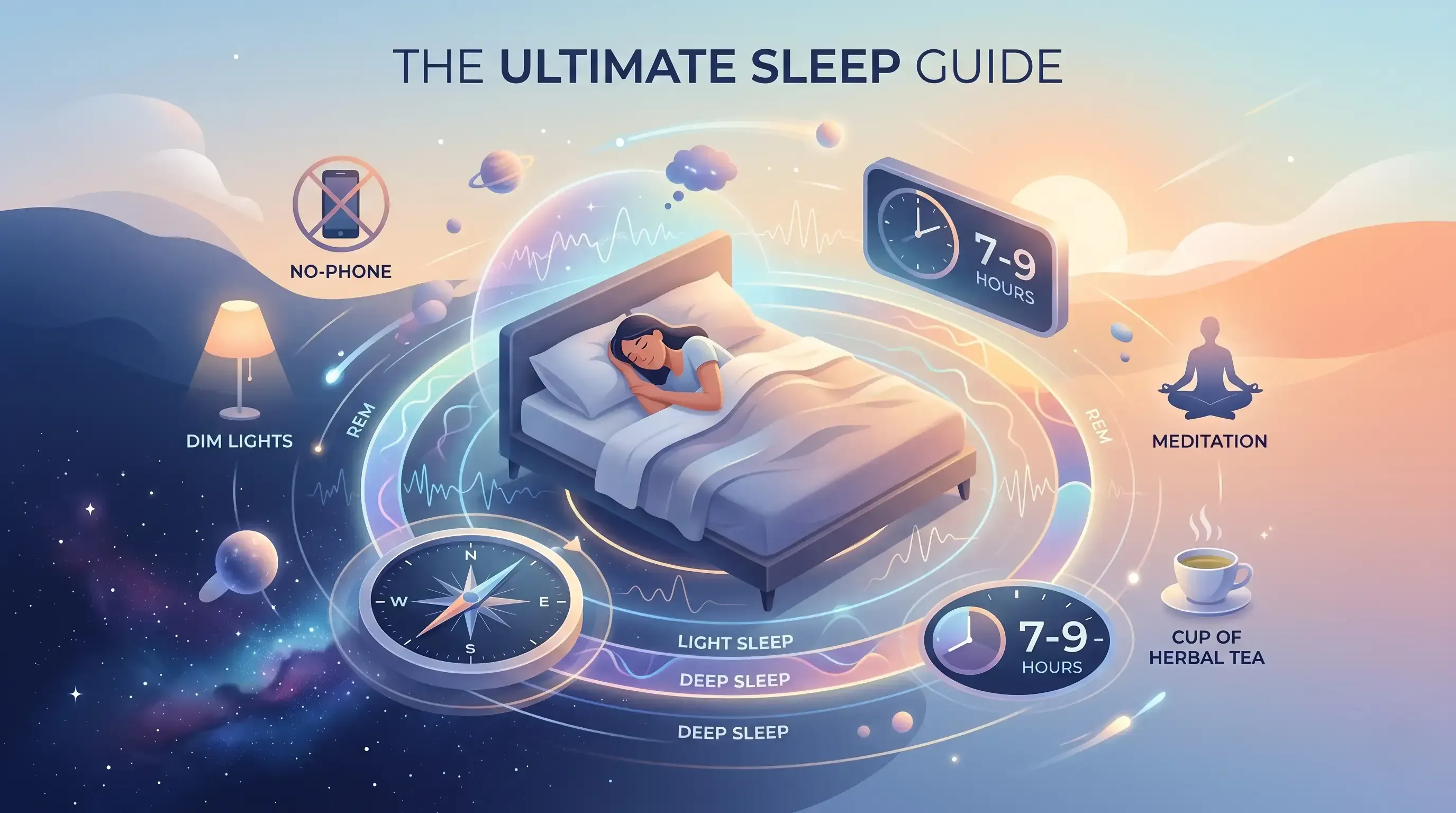
The Ultimate Sleep Guide: Direction, Duration, Science & Healthy Habits (2026)
Sleep is not a luxury — it is a biological necessity. Yet most people either sleep too little, sleep in the wrong position, or wake up exhausted despite spending 7–8 hours in bed. Whether you want to know which direction to sleep, how to fall asleep fast in 5 minutes, or what really happens when you do not sleep enough — this is the only guide you need.
We cover the science, the best habits, directions, duration, health risks, and answer the 25 most-asked questions about sleep in one place.
What Is Sleep and Why Does It Matter?
Sleep is a naturally recurring state of rest during which your brain and body undergo critical repair. Far from being "doing nothing," sleep is one of the most metabolically active periods of your entire day.
During sleep, your brain consolidates memories, flushes out toxins through the glymphatic system, and regulates hormones including cortisol, insulin, and growth hormone. Your muscles repair damaged tissue, your immune system produces protective cytokines, and your heart rate and blood pressure drop — giving your cardiovascular system a much-needed rest.
What makes sleep different from simply being unconscious is the structured cycling through distinct biological stages, each serving a specific function. Skipping or shortening sleep is not just about feeling tired the next day — it creates a compounding biological debt that affects every system in your body.
The Science of Sleep: Stages and Cycles
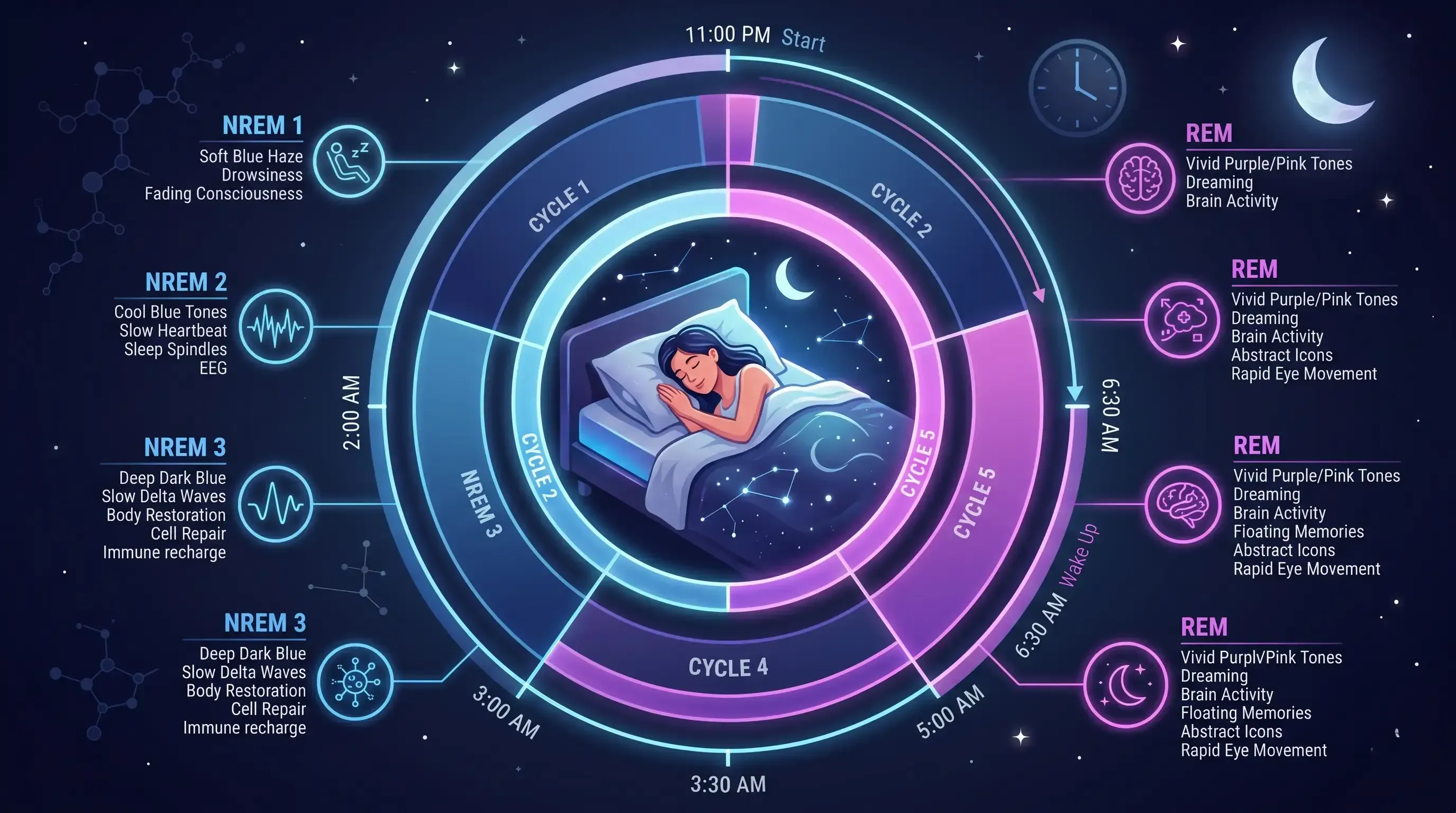
Your sleep is divided into cycles of approximately 90 minutes each. A full night typically includes 4–6 complete cycles. Each cycle contains the following stages:
Stage 1 — Light Sleep (NREM 1) You drift in and out of sleep. Muscle activity slows. This stage lasts just 1–5 minutes.
Stage 2 — True Sleep (NREM 2) Heart rate slows, body temperature drops, and brain waves slow down. This is where you spend the most total sleep time — roughly 50% of the night.
Stage 3 — Deep Sleep (NREM 3) Also called slow-wave sleep. This is the most physically restorative stage. Growth hormone is released here. It is difficult to wake someone from this stage. Children and teenagers spend more time in deep sleep than adults.
Stage 4 — REM Sleep REM stands for Rapid Eye Movement. Your brain is almost as active as when you are awake. This is where most dreaming happens, and it is critical for emotional regulation, creativity, and long-term memory. REM sleep increases in duration across the night — meaning the last 2 hours of an 8-hour sleep contain far more REM than the first 2 hours. This is why cutting sleep short is so cognitively costly.
What Is the Most Obvious Advantage of Sleep?
The single most obvious advantage of sleep is cognitive performance. After even one night of poor sleep, reaction time drops by up to 300%, decision-making deteriorates, creativity falls sharply, and emotional regulation becomes unstable. You become, in measurable terms, a worse version of yourself.
But beyond cognition, the advantages of sleep stack up across every system:
- Immune system: Sleep deprivation reduces vaccine effectiveness and cuts natural killer cell activity by up to 70% after just one bad night (University of California, Berkeley research).
- Metabolism: Poor sleep disrupts ghrelin and leptin — the hormones that control hunger and fullness — leading to increased appetite, especially for high-calorie foods.
- Heart health: Consistently sleeping fewer than 6 hours increases the risk of heart disease and stroke significantly.
- Mental health: Chronic sleep deprivation is strongly linked to depression, anxiety, and increased risk of burnout.
- Skin: During deep sleep your body produces collagen, repairs UV damage, and reduces inflammation — which is where the term "beauty sleep" comes from.
Sleep is the single highest-leverage health habit you can build. No supplement, diet, or exercise routine compensates for consistent poor sleep.
How Many Hours of Sleep Do You Actually Need?
Sleep needs vary by age, but the research is clear:
|
Age Group |
Recommended Sleep |
|
Newborns (0–3 months) |
14–17 hours |
|
Infants (4–11 months) |
12–15 hours |
|
Toddlers (1–2 years) |
11–14 hours |
|
School-age children (6–13) |
9–11 hours |
|
Teenagers (14–17) |
8–10 hours |
|
Adults (18–64) |
7–9 hours |
|
Older adults (65+) |
7–8 hours |
Most adults function best on 7–9 hours. Sleeping fewer than 7 hours consistently has measurable negative effects on health. Sleeping more than 9 hours regularly can also indicate an underlying health issue and is associated with increased inflammation.
It is worth noting that sleep quality matters as much as quantity. Six hours of deep, uninterrupted sleep in a cool, dark room will often outperform eight hours of fragmented, light sleep.
Is 6 Hours of Sleep Enough for a Student?
No — 6 hours of sleep is not enough for most students, and the research on this is unambiguous.
Students aged 14–22 are in a critical window for brain development. The prefrontal cortex — responsible for judgment, impulse control, planning, and emotional regulation — is still developing through the mid-twenties. Deep sleep and REM sleep are directly responsible for consolidating everything learned during the day into long-term memory. Cutting sleep short literally erases learning.
Studies consistently show that students who sleep 8–9 hours perform significantly better in exams, retain more information, and have better mental health outcomes than students sleeping 6 hours or fewer. The practice of pulling all-nighters before exams is, neurologically, one of the worst things a student can do.
For a student, 8 hours of sleep is the minimum goal, not a luxury. Many high-performing students and researchers sleep 8.5–9 hours and credit sleep as a core study strategy, not something that competes with studying.
Which Direction Should You Sleep? (Science + Vastu)
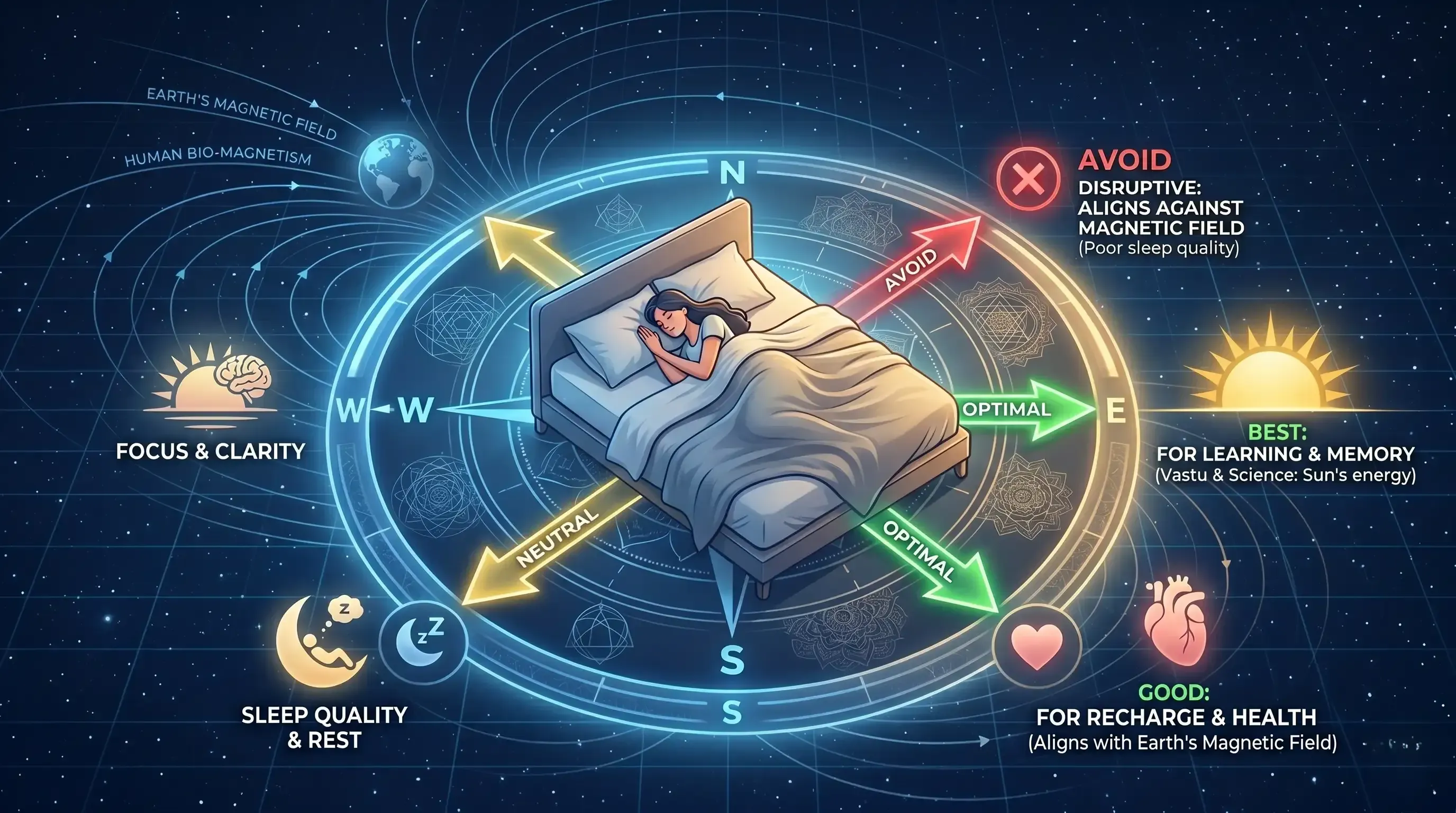
This is one of the most searched sleep questions in India and Southeast Asia, and it sits at the intersection of ancient wisdom and modern science.
The Science Perspective
The Earth functions as a giant magnet with magnetic field lines running from the geographic South Pole to the North Pole. Some researchers suggest that sleeping with your head pointing North aligns your body's own bio-magnetic field with the Earth's, potentially disrupting blood flow to the brain, disturbing sleep quality, and causing stress on the heart over time.
Sleeping with your head pointing East or South is generally considered optimal by most sleep researchers and physicians who study magnetobiology.
East — Best direction. Associated with improved concentration, memory, and alertness. The rising sun creates a natural light gradient that regulates your circadian rhythm.
South — Second best. Research from Russia and India's sleep research bodies suggest south-facing sleep may be linked to reduced blood pressure and deeper sleep cycles.
West — Acceptable but associated with more vivid dreams and slightly less restorative sleep for some individuals.
North — Most avoided direction in both science and tradition, discussed in detail in the next section.
Vastu Shastra Perspective
Vastu Shastra, the ancient Indian science of space and energy, recommends sleeping with your head pointing South as the primary direction, and East as the second choice. Vastu associates the North direction with the magnetic pull from the North Pole of the Earth, which it considers disruptive to the body's own energy field (prana).
Both perspectives — modern magnetobiology and ancient Vastu — converge on the same practical advice: avoid North, prefer South or East.
Why Should You Not Sleep With Your Head Facing North?
The Earth's magnetic field runs from South to North. Iron-containing hemoglobin in your blood is weakly magnetic. When you sleep with your head pointing North, the theory holds that this creates a mild but consistent magnetic stress on blood circulation in the brain — the organ that needs the most oxygen during sleep.
Some Indian medical researchers and sleep physicians point to elevated blood pressure readings, increased cortisol levels, and poorer sleep quality in subjects consistently sleeping North-facing. While large-scale Western studies on this are limited, the convergence of Vastu, Ayurvedic medicine, and early magnetobiology research makes this a widely recommended precaution.
Beyond the magnetic argument, the practical reason most people notice is this: those who switch from North to South-facing sleep frequently report falling asleep faster, waking up feeling more refreshed, and experiencing fewer morning headaches within just 2–3 weeks.
If changing your bed position is impossible, East is your next best option.
How to Fall Asleep Fast in 5 Minutes
Falling asleep fast in 5 minutes is achievable with consistent practice of the right techniques. The most research-supported method is the Military Sleep Method, reportedly developed for US military pilots to fall asleep in under 2 minutes under high-stress conditions.
The Military Sleep Method:
- Relax your entire face — jaw, tongue, eyes, forehead.
- Drop your shoulders as low as they will go. Let your arms hang loose.
- Exhale and relax your chest.
- Relax your legs, thighs, and calves completely.
- Clear your mind for 10 seconds. Visualize a calm scene — a dark room, floating on still water.
- If thoughts intrude, repeat "don't think" slowly for 10 seconds.
4-7-8 Breathing Technique (Dr. Andrew Weil)
- Inhale through your nose for 4 counts
- Hold your breath for 7 counts
- Exhale through your mouth for 8 counts
- Repeat 4 times
This activates the parasympathetic nervous system and has been shown to reduce sleep-onset time significantly.
Progressive Muscle Relaxation Starting from your toes and working upward, tense each muscle group for 5 seconds and then release. By the time you reach your face, most people are already asleep or very close.
The key to all of these methods is consistency — the body learns to associate the routine with sleep onset. After 1–2 weeks of nightly practice, these techniques become dramatically more effective.
How to Sleep 8 Hours in 4 Hours — Is It Really Possible?
This is one of the most searched sleep questions on the internet, and the honest answer is: you cannot fully replicate 8 hours of sleep in 4 hours — but you can dramatically improve the quality and efficiency of the sleep you do get.
What people often mean when they ask this question is: "How do I feel as rested in less time?" The answer lies in sleep efficiency — the percentage of time in bed that is actually spent in restorative sleep stages.
Strategies to improve sleep efficiency:
- Consistent sleep and wake times — Your circadian rhythm is a timer. If you go to bed and wake at the same time every day, your body compresses into deeper sleep stages faster.
- Cool room temperature — 18–20°C (65–68°F) is the optimal sleep temperature. A cool room pushes you into deep sleep faster.
- Complete darkness — Even small amounts of light suppress melatonin. Blackout curtains or a sleep mask make a real difference.
- No screens 1 hour before bed — Blue light from screens delays melatonin production by up to 90 minutes.
- Polyphasic sleep — Practiced by some high-performers, this involves replacing one long sleep block with multiple shorter ones. The most sustainable version is one 6-hour core sleep plus one 20-minute nap. This is not for everyone and requires a strict schedule to maintain.
The most important takeaway: 4 hours of sleep will never equal 8 hours biologically. If you are consistently sleeping 4–5 hours and functioning, you are likely running a growing sleep debt that will catch up over time.
How to Reset Your Sleep Cycle
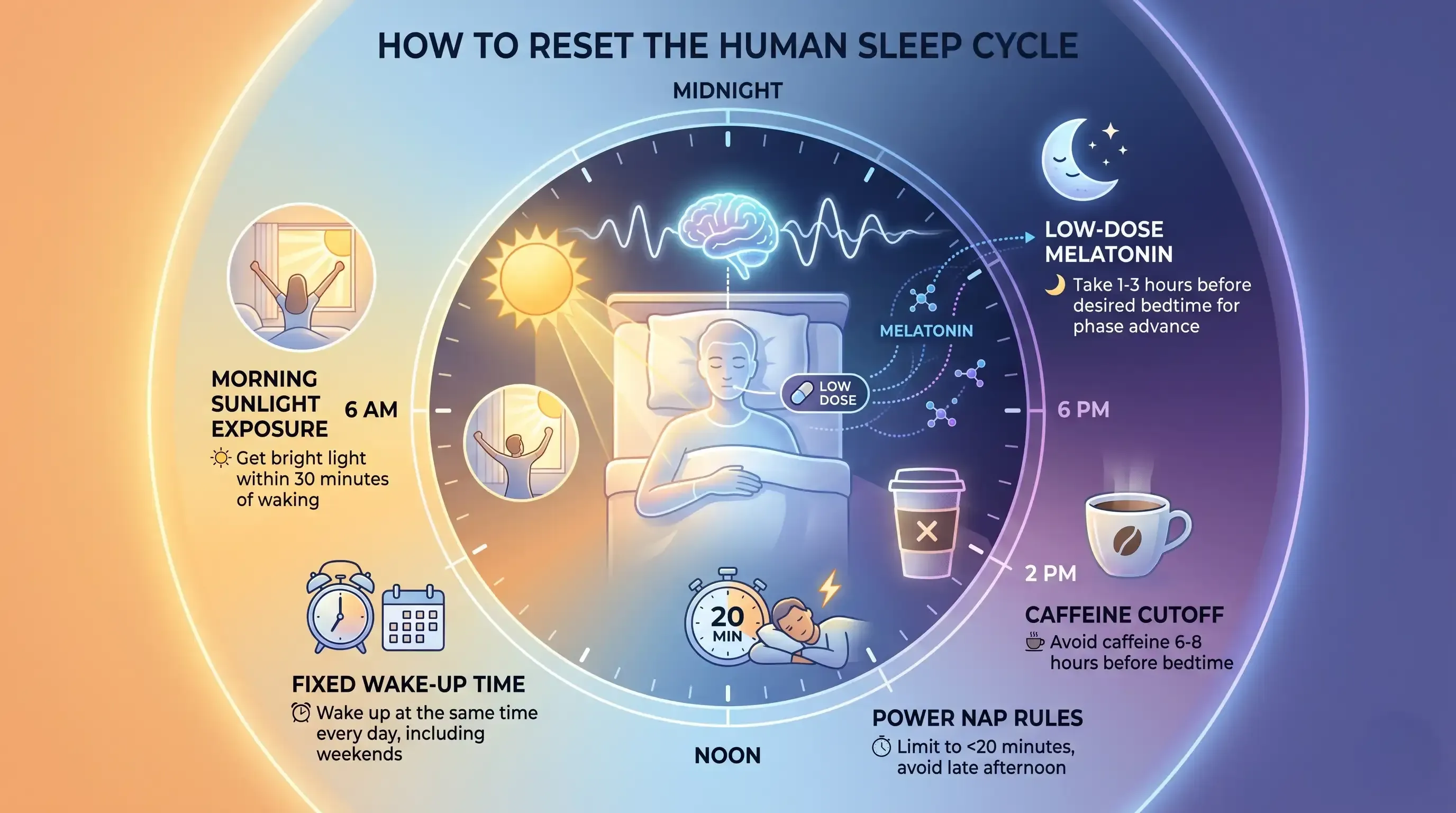
A disrupted sleep cycle — from shift work, travel, stress, or irregular schedules — can make even exhausted people unable to fall asleep at reasonable hours. Resetting it requires targeting your circadian rhythm directly.
Steps to reset your sleep cycle:
Step 1 — Morning light exposure. Get 10–20 minutes of direct sunlight within 30 minutes of waking. This is the single most powerful zeitgeber (time-giver) for your circadian clock. It tells your brain exactly what time it is and sets the 14–16 hour countdown to melatonin release.
Step 2 — Fix your wake time first. Do not try to fix your bedtime. Fix your wake time. Set an alarm for the same time every day — including weekends — and get up regardless of how you feel. Within 3–5 days your sleep onset will begin adjusting automatically.
Step 3 — Avoid naps longer than 20 minutes. Long afternoon naps reduce sleep pressure (the adenosine buildup that makes you sleepy) and make nighttime sleep harder.
Step 4 — Eliminate caffeine after 2 PM. Caffeine has a half-life of 5–6 hours. A coffee at 4 PM means half that caffeine is still circulating at 10 PM, pushing back sleep onset.
Step 5 — Use low-dose melatonin strategically. A dose of 0.5–1 mg taken 1 hour before your target bedtime can help shift your sleep phase earlier. Higher doses (5–10 mg) are less effective for phase shifting and more commonly cause morning grogginess.
What Happens When You Do Not Sleep Enough?
Sleep deprivation is one of the most underappreciated health crises of the modern world. Here is what happens to your body and brain on a timeline:
After 17–19 hours without sleep: Cognitive impairment equivalent to a blood alcohol level of 0.05% — which is legally impaired in most countries.
After 24 hours: Significant memory impairment, reduced pain tolerance, increased inflammatory markers, emotional instability, and reaction times comparable to being legally drunk.
After 36 hours: Hallucinations, paranoia, and microsleeps (brief involuntary sleep episodes of 1–30 seconds) begin. These microsleeps while driving are responsible for a significant percentage of road fatalities globally.
Chronic sleep deprivation (less than 6 hours nightly for weeks/months): Increased risk of type 2 diabetes, obesity, cardiovascular disease, depression, Alzheimer's disease, and a measurably shortened lifespan. A landmark 2019 study published in Nature Communications found that sleeping 6 hours or fewer per night in your 50s is associated with a 30% increased risk of dementia.
Can Lack of Sleep Cause Headaches, Dizziness and Hair Loss?
Yes — lack of sleep is directly linked to all three.
Headaches: Sleep deprivation triggers the release of stress hormones that cause blood vessel dilation in the brain, leading to tension headaches and migraines. People with chronic insomnia are significantly more likely to suffer from daily headaches.
Dizziness: Poor sleep disrupts the vestibular system — the balance and orientation system in your inner ear. Sleep deprivation can cause lightheadedness, vertigo, and difficulty concentrating that closely mimics the effects of inner ear disorders.
Hair loss: This one surprises many people. Chronic lack of sleep elevates cortisol levels. High cortisol pushes hair follicles into the telogen (resting/shedding) phase prematurely, a condition called telogen effluvium. Hair loss from poor sleep typically appears 2–3 months after the period of sleep deprivation, making the connection easy to miss.
Additionally, can lack of sleep cause high blood pressure? Absolutely. Sleep is the primary period during which your blood pressure dips. Without adequate sleep, this "nocturnal dipping" does not occur, and baseline blood pressure climbs over time.
What Is REM Sleep and Is It Good or Bad?
REM sleep is unequivocally good — it is essential.
REM (Rapid Eye Movement) sleep is the stage during which your brain processes emotional experiences, consolidates declarative memory (facts and events), and performs what neuroscientist Matthew Walker calls "overnight therapy." During REM, the stress neurochemical noradrenaline is completely absent from the brain, allowing you to process difficult memories without the emotional charge attached to them.
People deprived of REM sleep specifically (which is what alcohol does — it suppresses REM even if total sleep time is maintained) wake up emotionally reactive, anxious, and cognitively impaired even if they feel they "slept fine."
REM sleep also appears to be the stage most associated with creativity. Many famous scientific and creative breakthroughs — including the discovery of the benzene ring structure and Dmitri Mendeleev's periodic table — are attributed to insights received during or immediately following REM sleep.
The concern some people have about REM — vivid or disturbing dreams — is actually a sign of normal processing, not pathology. Dreams during REM are your brain's way of integrating new experiences with existing knowledge.
What Is Sleep Paralysis?
Sleep paralysis is a temporary inability to move or speak that occurs when you are falling asleep or waking up. It happens when your brain transitions between sleep stages — particularly at the edge of REM sleep — but your voluntary muscles remain in the atonia (paralysis) state that normally prevents you from acting out your dreams.
Episodes last from seconds to a couple of minutes. They are not dangerous, but they can be deeply frightening, especially when accompanied by hypnagogic hallucinations — vivid visual, auditory, or tactile sensations that feel completely real. Many people describe feeling a presence in the room, seeing shadowy figures, or feeling pressure on their chest.
Sleep paralysis is more common with irregular sleep schedules, sleep deprivation, sleeping on your back, and high stress. It affects an estimated 8% of the general population at least once in their lives, and up to 28% of students.
In Islamic tradition, sleep paralysis is sometimes associated with spiritual explanations, but from a medical standpoint it is a benign neurological event.
If episodes are frequent, improving sleep hygiene — consistent schedule, side sleeping, reducing stress — resolves most cases without medication.
How to Calculate Your Sleep Debt
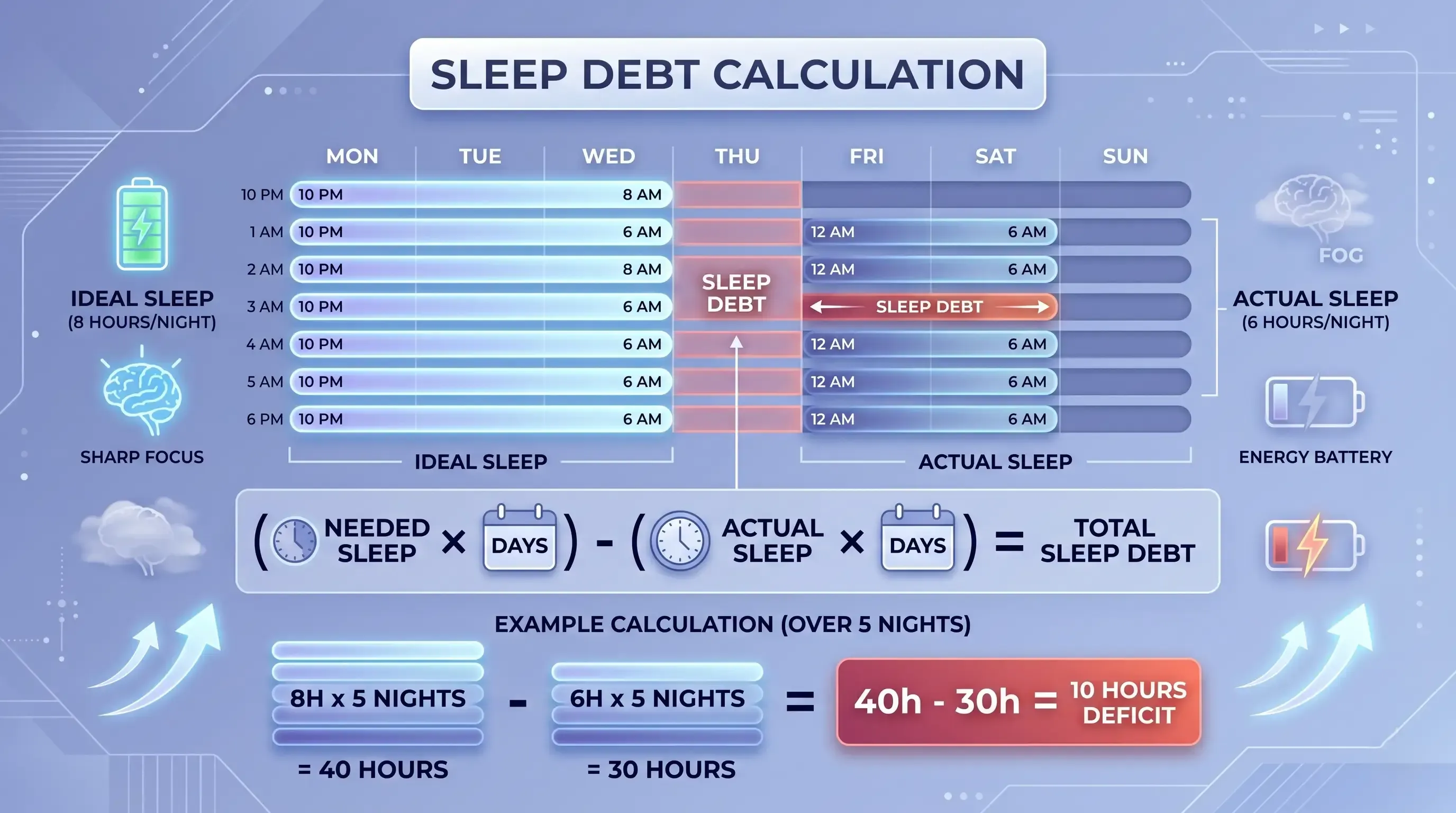
Sleep debt is the cumulative difference between the amount of sleep your body needs and the amount it actually gets.
Formula: Sleep Debt = (Hours of sleep needed per night × Number of nights) − (Actual hours slept × Number of nights)
Example: You need 8 hours. You slept 6 hours per night for 5 nights. Sleep debt = (8 × 5) − (6 × 5) = 40 − 30 = 10 hours of sleep debt
The bad news: sleep debt accumulates fast and does not fully repay quickly. You cannot simply sleep 10 extra hours on the weekend and reverse a week of deprivation. Research shows you can recover some cognitive function, but certain biological markers (inflammatory cytokines, metabolic hormones) remain disrupted for days after repayment.
The good news: consistent good sleep over 2–3 weeks does meaningfully restore baseline function and energy.
To calculate your sleep debt, track your sleep daily using a phone app (Sleep Cycle, Oura Ring data, or even a simple notes app) and compare against your personal sleep need. Most adults fall between 7.5 and 8.5 hours of genuine need.
Does Sleeping Increase Height or Weight?
Height: Sleeping does directly support height — particularly in children and teenagers. The majority of human growth hormone (HGH) is secreted during deep sleep (NREM Stage 3). This is not a myth — it is measurable endocrinology. Children who consistently get adequate sleep grow taller on average than children who are chronically sleep-deprived. In adults, HGH released during sleep supports tissue repair, muscle building, and bone density maintenance rather than height increase.
Sleeping in a position that decompresses the spine — such as on your back without a thick pillow, or on your side with a pillow between your knees — can help you maintain spinal alignment and even help you feel slightly taller in the morning as spinal discs rehydrate overnight.
Weight: Yes, poor sleep increases weight, and the mechanism is well understood. Sleep deprivation elevates ghrelin (hunger hormone) and reduces leptin (fullness hormone), reliably increasing caloric intake the following day. Studies show sleep-deprived people consume an average of 300–500 extra calories per day compared to well-rested people. Additionally, does sleeping in the afternoon increase weight? Only if the extra calories consumed are not offset. An afternoon nap itself does not cause weight gain — it is the hormonal disruption from chronic poor nighttime sleep that does.
How Many Calories Do You Burn During Sleep?
Your body burns calories during sleep as it maintains temperature, circulates blood, repairs tissue, and powers brain activity. We do burn calories while sleeping — approximately 50–100 calories per hour depending on your body weight and metabolism.
A 70 kg adult sleeping 8 hours burns roughly 500–600 calories during sleep. This is significantly less than active waking hours but far from zero.
Calculation formula (approximate): Calories burned per hour of sleep ≈ Body weight (kg) × 0.9
So a 60 kg person burns approximately 54 calories per hour of sleep, or about 432 calories over an 8-hour night.
Deep sleep (NREM Stage 3) burns slightly fewer calories per minute than REM sleep, during which brain activity is high. Improving sleep quality — specifically increasing deep sleep and REM proportions — slightly increases overnight caloric burn.
How to Sleep Early and Wake Up Early
Shifting your sleep schedule earlier is a circadian rhythm adjustment. It takes 7–14 days of consistent practice and works best with the following approach:
- Move your bedtime back in 15-minute increments. Do not try to suddenly sleep 2 hours earlier. Shift by 15 minutes every 2 days until you reach your target bedtime.
- Lock your wake time immediately. Wake at your target time from Day 1, even if you went to bed late. Tiredness will reinforce earlier sleep onset within days.
- Use morning light aggressively. Step outside within 30 minutes of waking. Morning sunlight is the single most powerful signal for advancing your circadian phase.
- Dim all lights after 8 PM. Bright indoor lighting delays melatonin production. Use warm, dim lighting in the evenings. Install f.lux or Night Mode on all devices.
- Exercise in the morning or early afternoon. Evening exercise (especially within 3 hours of bedtime) raises core body temperature and delays sleep onset.
- Avoid alcohol as a sleep aid. Alcohol causes you to fall asleep faster but dramatically reduces sleep quality, suppresses REM, and causes rebound wakefulness in the second half of the night.
Beauty Sleep — Is It Real?
Yes — beauty sleep is real, and it is measurably visible. Studies using blind rater panels have repeatedly shown that people who are sleep-deprived are perceived as less attractive, less healthy, and less approachable than the same individuals photographed after adequate sleep.
The mechanisms are clear. During deep sleep, what is beauty sleep actually doing? Your body releases growth hormone which stimulates collagen production — the structural protein responsible for skin firmness and elasticity. Blood flow to the skin increases by up to 20% during sleep, delivering nutrients and removing waste products. The inflammatory responses that cause puffiness, redness, and dark circles under the eyes are directly linked to sleep deprivation.
Chronic poor sleep accelerates the visible signs of aging — fine lines, uneven skin tone, and reduced skin barrier function — measurably faster than sun exposure in some long-term studies.
The skin care products you use at night are also more effective during sleep because the skin's absorption rate and regeneration activity are both elevated.
What Is Sleep Debt? 10 Science-Backed Tips for Better Sleep Tonight
- Keep a fixed wake time — even on weekends. This is the single most effective habit for sleep quality.
- Make your bedroom cold — 18–20°C. Your body needs to drop its core temperature to initiate and maintain sleep.
- Complete darkness — use blackout curtains or a sleep mask. Light, even dim light from a phone charging, can suppress melatonin.
- No caffeine after 2 PM — caffeine's 5–6 hour half-life means afternoon coffee is still active at bedtime.
- No alcohol within 3 hours of sleep — it fragments sleep and blocks REM.
- Screen-free 60 minutes before bed — blue light delays melatonin by up to 90 minutes.
- Use your bed only for sleep and sex — this is called stimulus control and helps your brain associate bed with sleep rather than wakefulness.
- Exercise regularly, but not within 3 hours of bedtime — regular physical activity increases deep sleep by up to 25%.
- Wind-down routine — 20–30 minutes of the same calm activities before bed (reading a physical book, light stretching, journaling) trains your nervous system to downshift.
- If you cannot sleep after 20 minutes, get up — lying in bed awake trains your brain to associate bed with wakefulness. Go to another room, do something calm and dim, and return when sleepy.
Reference: Why We Sleep — Matthew Walker (Recommended Reading) https://www.sleepdiplomat.com/professor
Conclusion
Sleep is the foundation that every other health habit rests on. You can eat perfectly, exercise daily, and take every supplement available — but without adequate, quality sleep, you are building on a cracked foundation.
The research is clear: 7–9 hours of quality sleep per night is not optional for long-term health, cognitive performance, emotional stability, and physical appearance. The direction you sleep matters. The consistency of your schedule matters. The darkness and temperature of your room matter.
Start with one change tonight — fix your wake time and do not touch your phone for 30 minutes after getting into bed. That single shift, maintained for two weeks, will change how you feel more than almost any other intervention.
Sleep well.