How to Figure Out Rising Moon and Sun: A Simple Guide
Have you ever looked up at the sky and wondered exactly when the day will begin or when the moon will grace the night? Understanding the cycles of our most prominent celestial neighbors is not just for astronomers; it is a practical skill for photographers, hikers, and anyone who appreciates the natural world. Learning how to figure out rising moon and sun times allows you to plan your outdoor adventures with precision and never miss a breathtaking golden hour or a dramatic moonrise.
While the mechanics behind these movements involve complex orbital physics, modern tools and a basic understanding of geography make it easy for anyone to stay informed. Whether you are using a digital calculator or observing physical cues, this guide will simplify the process of tracking the sun and moon.
The Basics of Solar and Lunar Movements
To understand how to figure out rising moon and sun positions, you must first recognize that these events are defined by the Earth's rotation and the Moon's orbit. Sunrise and sunset occur when the upper rim of the Sun crosses the horizon. Because the Earth is a sphere, your specific latitude and longitude significantly impact these times. For instance, the length of daylight varies greatly between the equator and the poles depending on the season.
The Moon is slightly more complex. Unlike the Sun, which follows a relatively consistent daily schedule, the Moon rises on average about 50 minutes later each day. This shift occurs because the Moon moves approximately 13 degrees eastward in its orbit every 24 hours. Consequently, the Moon can rise at any time of the day or night, depending on its current phase.
Using Online Calculators and Apps
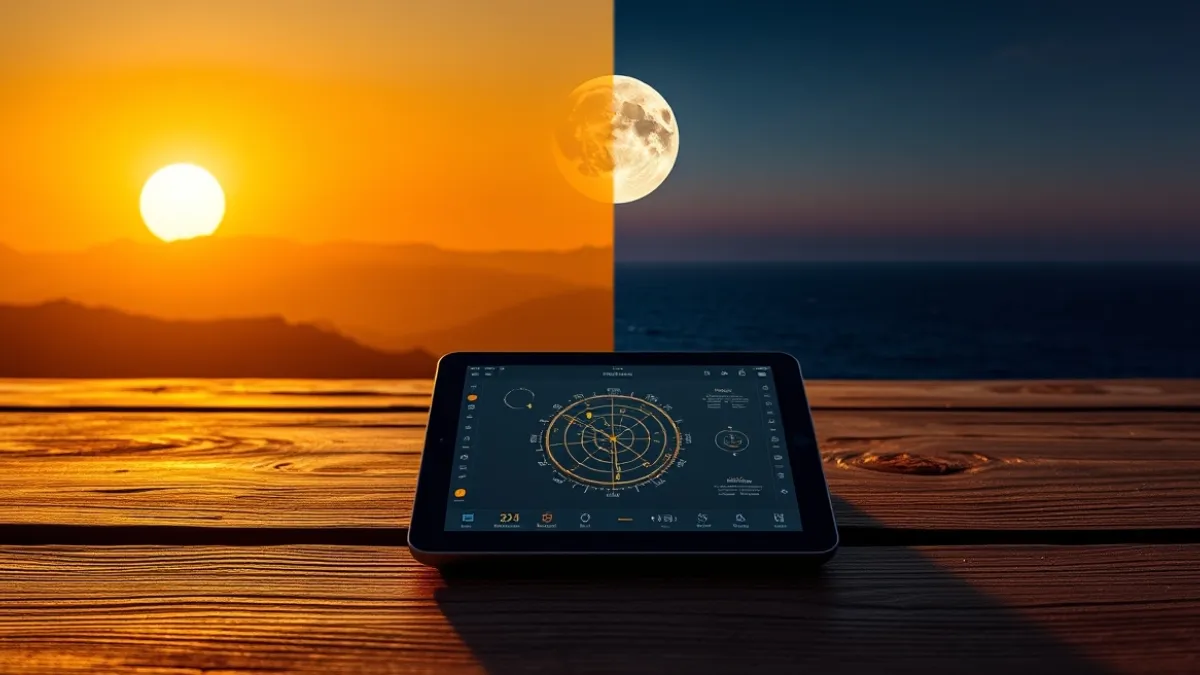
The most accurate and convenient way to learn how to figure out rising moon and sun times is through digital tools. Professional services like Time and Date provide precise tables for any location on Earth. These calculators account for atmospheric refraction—the way the atmosphere bends light—which actually allows us to see the Sun and Moon slightly before they physically cross the horizon.
\How to Figure Out Rising Moon Times by Phase
If you don't have access to an app, you can still estimate lunar timings based on the Moon's phase. The relationship between the Sun, Earth, and Moon determines when the Moon will appear in the sky. By knowing the current phase, you can roughly determine how to figure out rising moon and sun patterns for the week.
\For those interested in the technical side of these observations, the U.S. Naval Observatory offers extensive resources on the algorithms used to compute these phenomena. Their data is the gold standard for maritime and astronomical navigation.
Why Timing Matters for Outdoor Enthusiasts
Knowing how to figure out rising moon and sun schedules is vital for safety and success in the outdoors. For hikers, knowing the sunset time prevents being caught on a trail after dark. For photographers, the "Golden Hour"—the period shortly after sunrise or before sunset—provides the soft, warm light necessary for professional-grade landscapes. Furthermore, astronomers need to know when the Moon will set to ensure the sky is dark enough to observe faint stars and distant galaxies.
Maintaining Your Celestial Calendar
To stay consistent, it is helpful to check a reliable source at the beginning of each week. Because the Earth's tilt causes the Sun's rising point to shift north or south throughout the year, the times change daily. Proper care in tracking these shifts ensures you are always prepared for the day's light. Whether you are chasing the first light of dawn or waiting for a spectacular full moon to crest the horizon, mastering how to figure out rising moon and sun data will deepen your connection to the rhythms of the universe.